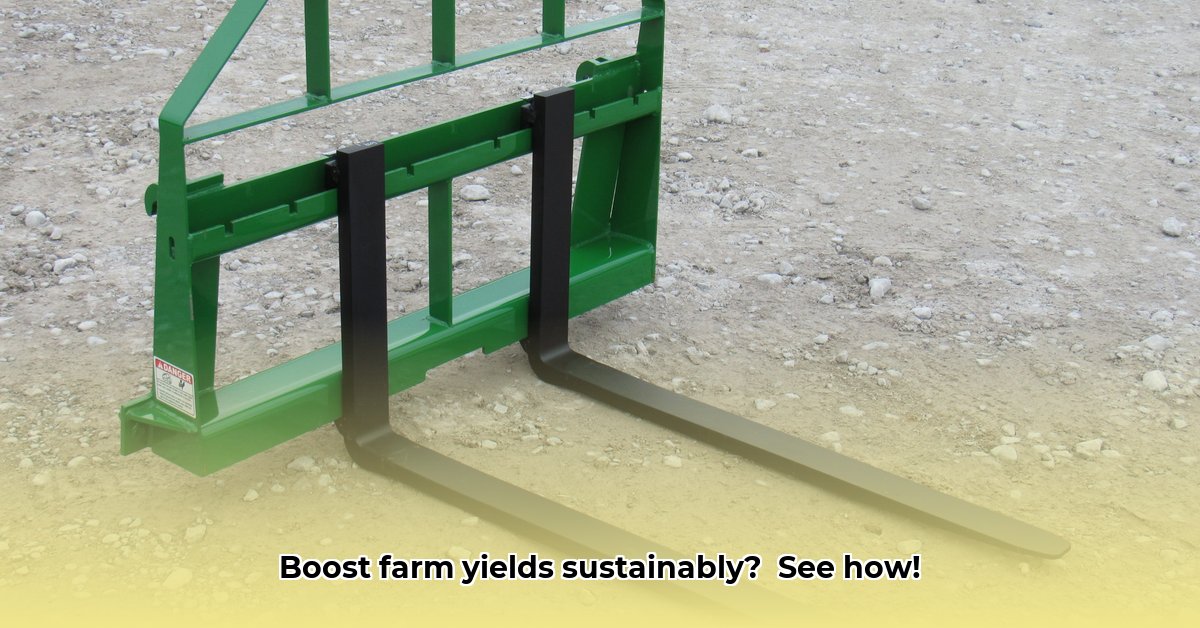
Fork Attachment for Tractor: Revolutionizing Farm Efficiency
Transforming farm operations for increased efficiency and sustainable practices is a key focus for modern agriculture. One innovation proving highly effective is the tractor forklift attachment. This article explores its benefits, challenges, and practical implementation, empowering farmers to make informed decisions about incorporating this technology. For Kubota tractor owners, exploring compatible attachments is a great starting point.
The Advantages of Tractor Forklift Attachments: More Than Just Muscle
Tractor forklift attachments significantly reduce manual labor, a substantial benefit in terms of both time and cost savings. Farmers report decreased labor costs and increased efficiency. One farmer noted a reduction in workload completion time from a week to just a few days. This increased efficiency directly translates to higher yields and potential farm expansion.
Furthermore, fuel efficiency improves due to fewer trips with the tractor, lowering operating expenses and minimizing the farm's environmental footprint. The time saved on material handling can be redirected towards other crucial farm tasks, leading to overall improved productivity and a more sustainable operation. Doesn't the prospect of greater efficiency and lower fuel consumption appeal to your farm’s bottom line?
Potential Challenges and How to Overcome Them
While the advantages are considerable, potential challenges must be addressed. The initial investment cost can be high, ranging from $5,000 to $15,000 depending on size and features. However, financing options can alleviate this burden. Furthermore, a thorough cost-benefit analysis, as detailed later, can help justify the investment.
Another concern is potential soil compaction from heavier attachments. To mitigate this, choose lighter-duty attachments where appropriate and implement soil-improving techniques like cover cropping or no-till farming. These practices significantly reduce the long-term negative impacts.
Finally, thorough operator training is essential to avoid accidents and ensure both safety and efficient operation. Manufacturers and online resources offer various training programs to address this need. Investing in training is paramount for ensuring safe and effective use.
Selecting and Using Tractor Forklift Attachments Safely and Effectively
Choosing the right attachment is crucial for optimal performance and efficiency. Consider these key factors:
- Weight Capacity: Select an attachment that aligns with your tractor's capabilities and the heaviest loads you will handle.
- Compatibility: Ensure seamless integration with your tractor's hydraulic system.
- Intended Use: Different forks cater to specific materials; hay bales necessitate designs distinct from those suitable for pallets.
Here's a step-by-step guide to safe operation:
- Pre-operation Checklist: Inspect the attachment and tractor for damage or loose components. Verify correct hydraulic fluid levels.
- Secure Attachment: Attach the forklift securely, following the manufacturer's instructions.
- Accurate Load Assessment: Estimate load weight to prevent overloading.
- Smooth Lifting and Placement: Lift and lower loads gently, avoiding sudden movements.
- Prioritize Safety: Adhere to safety guidelines and maintain a safe distance from others during operation.
Remember, consistent maintenance is crucial for longevity and safety.
Analyzing Costs and Benefits: Is it Worth the Investment?
A thorough cost-benefit analysis is essential before making a purchase. The following table provides a framework, with costs and benefits varying based on specific circumstances.
| Factor | Potential Costs | Potential Benefits |
|---|---|---|
| Initial Purchase Price | $5,000 - $15,000 (depending on size and features) | Reduced labor costs, increased efficiency |
| Maintenance & Repairs | $500 - $1,000 per year (estimated) | Fewer breakdowns with proper maintenance |
| Fuel Savings | Varies greatly depending on usage | Lower operating expenses; environmental benefits |
| Increased Productivity | Difficult to quantify precisely, but significant | Higher yields; potential for expansion, ability to take on more contracts |
| Operator Training | $100 - $500 per operator | Safer operation; increased operational efficiency |
While the initial outlay is significant, the long-term gains from reduced labor, fuel savings, and increased productivity are often substantial. Careful consideration of these factors will illuminate the true return on investment.
How to Calculate ROI for Tractor Forklift Attachments in Sustainable Farming
A step-by-step guide to ROI calculation provides a clear pathway to evaluating the investment's potential. This process clarifies the financial benefits and assists farmers in making evidence-based decisions.
Step 1: Calculate total investment costs (purchase price, installation, modifications).
Step 2: Estimate annual savings (labor, fuel, time).
Step 3: Factor in depreciation and maintenance costs.
Step 4: Calculate ROI using the formula: (Net profit / Total investment) * 100. Net profit is annual savings minus depreciation and maintenance.
Conclusion: Investing in Efficiency and Sustainability
Tractor forklift attachments offer significant benefits for sustainable farming practices. While the initial investment requires careful consideration, a thorough cost-benefit analysis, coupled with appropriate operator training and a commitment to safe operation, makes a compelling case. Increased efficiency, reduced labor, and minimized environmental impact strongly support the integration of tractor forklift attachments for a more productive and sustainable future.